Vasilopita (Greek: Βασιλόπιτα, Vasilópita, lit. 'king-pie' or '(St.) Basil-pie', see below) is a New Year's Day bread or cake in Greece and many other areas in eastern Europe and the Balkans which contains a hidden coin or trinket which gives good luck to the receiver. It is made of a variety of doughs, depending on regional and family tradition, including tsoureki.
It is associated with Saint Basil's day, January 1, in most of Greece, but in some regions, the traditions surrounding a cake with a hidden coin are attached to Epiphany or to Christmas.
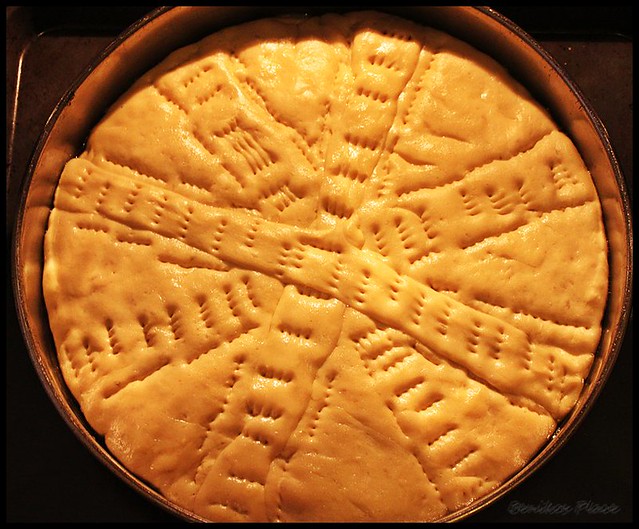
The RitualOn New Year's Day families cut the vasilopita to bless the house and bring good luck for the new year. This is usually done at the midnight of New Year's Eve. A coin is hidden in the bread by slipping it into the dough before baking. At midnight the sign of the cross is etched with a knife across the cake. A piece of cake is sliced for each member of the family and any visitors present at the time, by order of age from eldest to youngest. Slices are also cut for various symbolicall people or groups, depending on local and family tradition. They may include the Lord, St. Basil and other saints, the poor, the household, or the Kallikantzaroi. In older times, the coin often was a valuable one, such as a gold sovereign. Nowadays there is often a prearranged gift, money, or otherwise, to be given to the coin recipient.
Many private or public institutions, such as societies, clubs, workplaces, companies, etc, cut their vasilopita at a convenient time between New Year's Day and the beginning of the Great Lent, in celebrations that range from impromptu potluck gatherings to formal receptions or balls.
Saint Basil's Feast Day is observed on January 1, the beginning of the New Year and the Epiphany season known as the Vasilopita Observance.




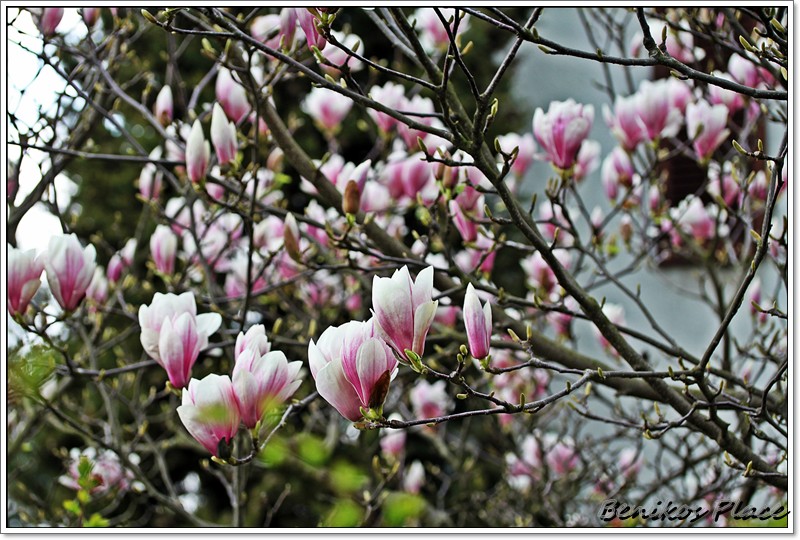
 Magnolia is an ancient genus. Having evolved before bees appeared, the flowers developed to encourage pollination by beetles. As a result, the carpels of Magnolia flowers are tough, to avoid damage by eating and crawling beetles. Fossilised specimens of M. acuminata have been found dating to 20 million years ago, and of plants identifiably belonging to the Magnoliaceae dating to 95 million years ago. Another primitive aspect of Magnolias is their lack of distinct sepals or petals.